
How winemaking works in Probably Stolen: the Bloobberry Wine recipe, fruit quality, fermentation, clean water and selling wine for a profit.
Probably Stolen Winemaking Guide: Bloobberry Wine
Wine is Probably Stolen's patience product. You combine fruit, water, and a recipe packet, wait through fermentation, and sell a bottle whose value depends on the inputs and the batch. It is not the fastest money in the game, but it uses time you are already spending serving customers.
The documented recipe is Bloobberry Wine. This guide covers the card, the quality levers, and the mistakes that turn a batch into cheap alcohol.
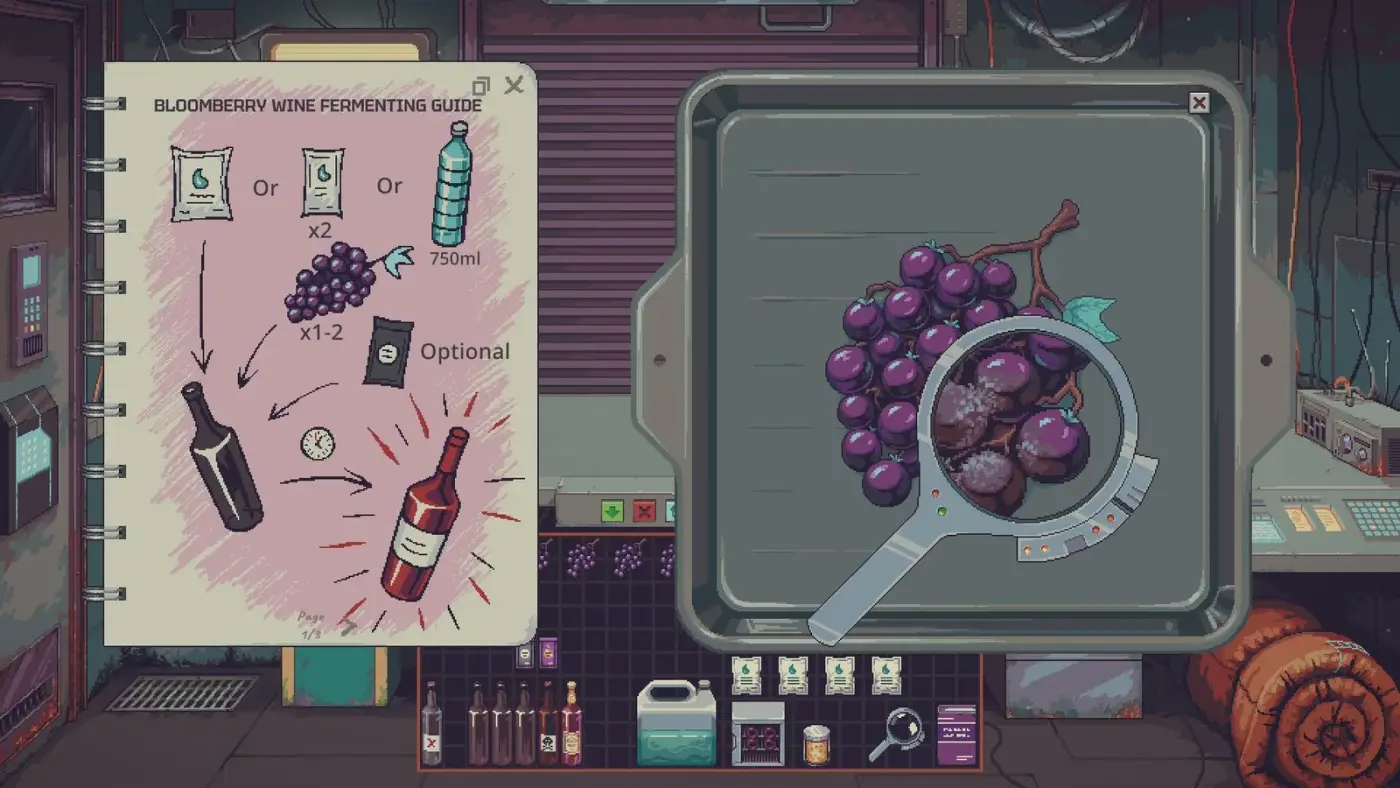
The Bloobberry Wine recipe
The in-game fermenting guide shows three ways to start the batch:
- 2 × recipe packets, or
- 750 mL of water, or
- a combination the card presents as equivalent
Then add:
- 1–2 grapes
- an optional additive packet
The exact role of the optional packet is not named on the visible card. Treat it as a quality or fermentation modifier and test one batch with it and one without before committing a large stock.
The grape count is a range, not a fixed requirement. More fruit may improve the body or value, but it also raises the input cost. The card does not state a linear “more grapes = more price” rule, so do not assume it.
What determines wine value
Wine value is not a single hidden number. The likely levers, based on the recipe and the game's item system, are:
| Lever | Effect | Confidence |
|---|---|---|
| Grape quality | Better fruit should produce a better bottle | High |
| Water quality | Clean water avoids off-flavours and contamination | High |
| Recipe packet vs water | Different starting base | Medium |
| Optional additive | May change fermentation or quality | Needs testing |
| Fermentation time | Under-fermented wine is low quality | High |
| Bottle condition | Damaged or mislabelled bottles lose value | Medium |
The page deliberately avoids invented price multipliers. The game does not publish a wine price table, and community testing is still thin. Use the customer's offer and your cost per bottle, not a guessed percentage.
Clean water is not optional
Wine is mostly water. If the water has heavy metals or chemical contamination, the batch inherits it. A purification tablet or a pitcher filter may improve the water, but the safe approach is to start with High-Quality or Pure water and test it before use.
Do not use the cheapest Basewater because “it will ferment anyway.” Fermentation does not remove heavy metals. The water guide explains the grades and the treatment limits.
Fruit quality and appraisal
Grapes are an appraised item, not a generic ingredient. Inspect the bunch before you buy: colour, firmness, mould, and packaging all matter. A cheap bunch with visible damage is a false economy if it lowers the whole batch.
The screenshot shows a magnified grape bunch with a quality readout. Use the same appraisal discipline you would use on a cybernetic hand: identify the grade, check for defects, and only then negotiate.
If you grow your own grapes with the Hydroponic System, the water and nutrients determine the fruit. The in-game manual warns that poor water or missing nutrients reduce yield.
Fermentation and temperature
Fermentation is a time-based process, not a stovetop recipe. The exact temperature window is not published in the sources used for this page. Keep the fermenter in a stable area and avoid moving it mid-cycle.
Alcohol evaporates above 78°C. That number comes from chemistry, but the same physical logic applies to any alcohol production. Do not heat wine or must above that range and expect to keep the alcohol.
Start a batch before you need the money, not when rent is due. Wine rewards planning and punishes rushed production.
Bottling and labelling
A finished bottle needs a clean container and an honest label. The Lower Levels Special achievement involves using a labeler to change a label, which shows the game treats labels as a real system. Mislabeling wine is fraud, and a customer who notices can report you.
Sell wine to buyers who value it: upper-level customers, restaurant suppliers, and private buyers. A lower-level customer may buy a bottle, but not at a premium. Match the bottle to the buyer.
A simple wine business plan
- Secure a clean water source.
- Buy or grow a small grape stock.
- Run one test batch with the basic recipe.
- Taste the result through its appraised value, not your hope.
- Run a second batch with the optional additive and compare.
- Only then scale to multiple fermenters.
The test batches cost time, not just credits. That is why wine is a mid-game line, not a day-one rescue.
Wine versus other production
| Product | Startup cost | Cycle | Best for |
|---|---|---|---|
| Water | Low | Minutes | Early cash flow |
| Wine | Medium | Days | Using idle time |
| Chemistry | High | Minutes to hours | High margin |
| Hydroponic crops | Medium | Days | Feeding wine and food |
| Guns | High | Variable | Licensed high-ticket sales |
Wine sits between water and chemistry. It is more profitable than plain water if the inputs are good, and less demanding than a full chemistry lab. It is a good second line for a shop that already has water and storage.
Common mistakes
- Using untested water because the bottle looks clean.
- Buying damaged grapes at a discount and losing the batch.
- Starting a batch too close to rent day.
- Assuming more grapes always means more value.
- Selling a mislabelled bottle to a customer who can read.
FAQ
What is the recipe for Bloobberry Wine? Two recipe packets or 750 mL water, 1–2 grapes, and an optional additive, according to the in-game fermenting guide.
How long does wine take? The exact fermentation time is not published in the sources used here. Treat it as a multi-day cycle and plan around rent.
Can I sell wine to any customer? You can offer it, but premium buyers pay more. Match the bottle to the customer's level and taste.
Is winemaking profitable? It can be, especially when it uses idle time and clean inputs. It is not a reliable emergency income.
Community source: in-game Bloobberry Wine fermenting guide and grape appraisal screen; Steam Community guides ↗; Probably Stolen store page ↗; Steam Workshop ↗.
Related
More Probably Stolen Guides
How to make money in Probably Stolen: margin math, appraisal profit, water and chemistry cash flow, and the purchases that pay back fastest.
Probably Stolen water grades, contamination types, test strips, filters, tablets, UV, purifiers and a repeatable workflow for selling clean water.
How Probably Stolen customers work: lower and upper level buyers, security, black market, haggling, special requests, and how to match stock to demand.
Probably Stolen difficulty explained: Price Gouge, Mark Up and Thin Margins modifiers, rent increases, permit costs, reputation multipliers and Endless Mode.
A Probably Stolen mods hub: Workshop categories and tag counts, the most subscribed mods, safe subscription habits, and where to start.
How the five Probably Stolen reputation tracks work, what raises and lowers them, and how faction standing changes prices, access and security.
Probably Stolen storage bays, inventory sorting, capacity limits, storage tabs and the mods that fix inventory management, including what is vanilla.
Probably Stolen translation mods explained: 39 Workshop language packs, Chinese and English tags, install order, font issues and quality checks.