
A complete Probably Stolen chemistry guide: blender loss, heating plate temperatures, chem finisher contamination, purity tiers and machine module math.
Probably Stolen Chemistry Guide: Machines and Purity
Chemistry is the deepest production system in Probably Stolen. It turns cheap reagents into pharmaceuticals whose price depends on purity, and purity depends on three things: the machine, the temperature, and the modules installed in the machine. A clean Lab Pure batch can be worth many times its input cost. A contaminated batch is a loss you cannot appraise away.
This guide explains the production chain and the module math. The chemistry recipes page lists temperatures and yields; the chemical supplies page covers inputs and contaminants.
The chemistry chain
A basic batch moves through four stages:
- Blend. Combine reagents in the Blender. This is where volume is lost.
- Heat. Bring the mixture to the correct temperature on the Heating Plate.
- Extract. Separate the active product from the solvent.
- Finish. Use the Chem Finisher to turn the liquid into a saleable form.
Not every recipe uses every stage, but the loss and contamination rules apply whenever the machine is used. The two numbers that matter most are yield loss in the Blender and contamination in the Chem Finisher.
Blender loss
The Blender loses 35% of the input volume with no modules. Each installed module reduces the loss:
| Modules | Loss |
|---|---|
| 0 | 35% |
| 1 | 20% |
| 2 | 10% |
| 3 | 5% |
| 4 | 0% |
That is a dramatic curve. A single module cuts the loss by 15 percentage points; the fourth module removes the last 5%. If you are running expensive reagents, the first two modules pay for themselves quickly. If you are running cheap water-based recipes, the module cost may not be worth it.
The standard module is reported to have a value of 70 credits, but machine-specific discounts change what a slot is worth. Do not assume every machine benefits equally.
Heating Plate temperature control
The base Heating Plate has a fixed 99°C setting. Modules change what the plate can do:
| Modules | Capability |
|---|---|
| 0 | Fixed 99°C |
| 1 | Up to 160°C |
| 2 | Custom temperature selection |
| 3–4 | Faster heating |
This is why chemistry guides keep telling you to upgrade the plate. A recipe that needs 120–129°C cannot be made on a stock plate. A recipe that needs 40–49°C can, but the fixed 99°C setting will destroy it.
Temperature is not a suggestion. Dream Cap extract denatures above 60°C; Nightmare extract above 50°C; alcohol evaporates above 78°C; Lipobond evaporates above 55°C. The plate's displayed target and the actual mixture temperature are not always the same thing, so watch the product, not just the dial.
The game's Chemistry 101 text describes a 40–60°C window for Dream Cap mush, while community testing reports that anything above 50°C turns it into plant matter. Use 40–49°C and verify on your build.
Chem Finisher contamination
The Chem Finisher adds contamination. The base penalty is 12%; modules reduce it:
| Modules | Contamination |
|---|---|
| 0 | 12% |
| 1 | 6% |
| 2 | 3% |
| 3 | 1% |
| 4 | 0% |
Contamination is the difference between a Near-Pharma batch and a Lab Pure batch. Without modules, the finisher caps you below the top tier no matter how clean the input was. With three modules, a clean batch can just reach 99%; with four, you have margin for error.
This is the key module investment in chemistry. A Blender module saves volume; a Finisher module raises the price tier. If you can only afford one set, finish clean first.
Purity tiers and price
Purity is bucketed, and each bucket applies a price modifier:
| Purity | Tier | Price modifier |
|---|---|---|
| 99%+ | Lab Pure | +135% |
| 90–99% | Pharma | +85% |
| 80–90% | Near-Pharma | +40% |
| 60–80% | Street Standard | 0% |
| 45–60% | Cut | −45% |
| 30–45% | Junk | −75% |
| Under 30% | Starch | −95% |
The difference between 89% and 90% is 45 percentage points of price. That makes the last few points of purity the most valuable part of the process. Do not settle for “good enough” if a second finisher module gets you over a tier boundary.
Acid and base
Acid and base are inputs, not finished products. They contain heavy metals that cannot be removed by filtering or tablets. The Composition Spectrometer is the tool that shows you which supplier batch is cleanest. Buy the cleanest acid/base you can find, and do not assume two bottles with the same label are equal.
If you are making a product that requires acid or base, test the input before you commit the whole batch. A contaminated input ruins the output no matter how good your finisher is.
Water in chemistry
Water is not just a filler. Its purity and contaminant profile affect the batch. Use the cleanest water you can afford, and do not use a bottle you have not tested. The water guide covers grades and purification.
A purification tablet only works in a container that already has water. It is not a magic cleaner for an empty machine. Plan your water supply before you start a batch.
A practical first chemistry setup
- Buy a Blender, Heating Plate, and Chem Finisher.
- Add one module to the Blender and one to the Finisher.
- Start with a recipe that stays below 99°C.
- Test the output purity before selling.
- Reinvest in a second Finisher module before expanding to a second recipe.
Do not start with the most complex recipe. The cost of a failed batch is higher than the cost of learning on a cheap one.
FAQ
What is the most important chemistry module? The Chem Finisher module, because it raises the purity tier and therefore the price. Blender modules are second.
Can I set a custom temperature without modules? No. The base plate is fixed at 99°C. One module raises the cap to 160°C; two modules allow custom temperatures.
Why is my product contaminated? The finisher adds contamination, and contaminated acid/base or water can add more. Check modules, inputs, and water before blaming the recipe.
Is chemistry profitable early? It can be, but it needs capital and a reliable input. Build it after you have a stable income and rent reserve.
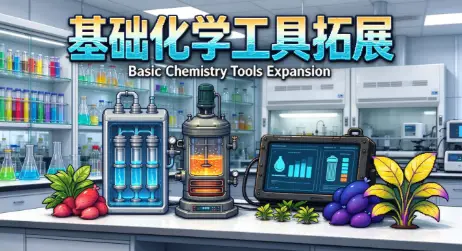
Community source: in-game Chemistry 101, community chemistry testing, and the Steam Community guide hub ↗. Store reference: Probably Stolen on Steam ↗. Workshop example: Basic Chemistry Tools Expansion ↗.
Related
More Probably Stolen Guides
How to make money in Probably Stolen: margin math, appraisal profit, water and chemistry cash flow, and the purchases that pay back fastest.
Probably Stolen water grades, contamination types, test strips, filters, tablets, UV, purifiers and a repeatable workflow for selling clean water.
How winemaking works in Probably Stolen: the Bloobberry Wine recipe, fruit quality, fermentation, clean water and selling wine for a profit.
How Probably Stolen customers work: lower and upper level buyers, security, black market, haggling, special requests, and how to match stock to demand.
Probably Stolen difficulty explained: Price Gouge, Mark Up and Thin Margins modifiers, rent increases, permit costs, reputation multipliers and Endless Mode.
A Probably Stolen mods hub: Workshop categories and tag counts, the most subscribed mods, safe subscription habits, and where to start.
How the five Probably Stolen reputation tracks work, what raises and lowers them, and how faction standing changes prices, access and security.
Probably Stolen storage bays, inventory sorting, capacity limits, storage tabs and the mods that fix inventory management, including what is vanilla.